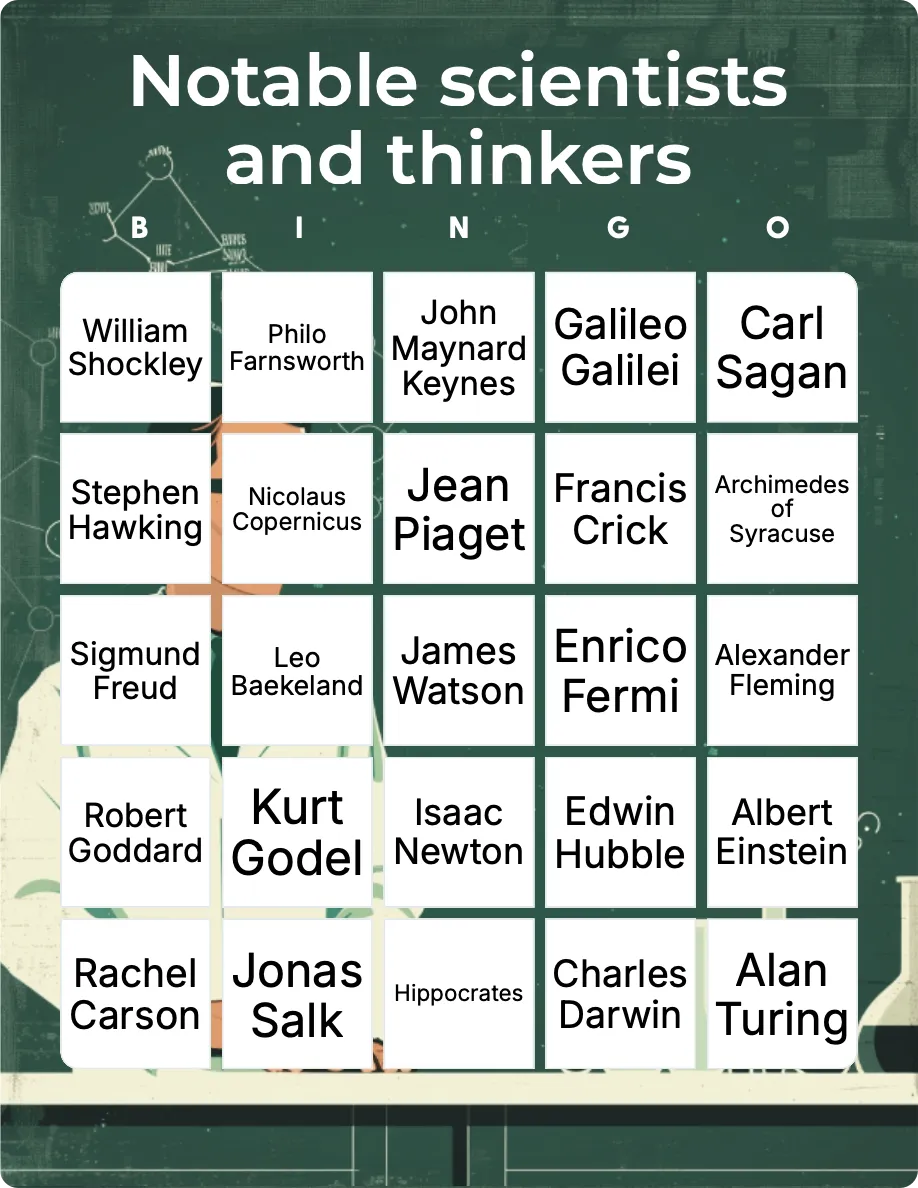
Notable scientists and thinkers bingo
Discover the brilliant minds who shaped our world with the Notable Scientists and Thinkers Bingo Card. From Einstein to Aristotle, this game is an excellent way to learn and have fun at the same time!
Choose an option
Why choose us
Fully editable
Grid size, free space, branding, human bingo, footer text & more
Print at home
Receive a randomized PDF with unique cards to print at home
Home delivery
We provide premium card printing and delivery.
Play online
Share a link, play virtually with up to 2,000 friends
Items in this card
25- William Shockley
- Stephen Hawking
- Sigmund Freud
- Robert Goddard
- Rachel Carson
- Philo Farnsworth
- Nicolaus Copernicus
- Leo Baekeland
- Kurt Godel
- Jonas Salk
- John Maynard Keynes
- Jean Piaget
- James Watson
- Isaac Newton
- Hippocrates
- Galileo Galilei
- Francis Crick
- Enrico Fermi
- Edwin Hubble
- Charles Darwin
- Carl Sagan
- Archimedes of Syracuse
- Alexander Fleming
- Albert Einstein
- Alan Turing
How to use this card
Ready to get your bingo on? 🌟 Here’s how:
- Start the fun: Hit the ‘Print/Play’ button to begin.
- Make it yours: Jazz up your card with custom content and snazzy designs.
- Join the bingo fam: Quick sign-up (if you’re new here) or log in to jump back into the action.
- Spread the joy: Grab a unique link to share your card for online games with pals, or print it out for some real-life bingo fun!
Related categories
Related cards
Black history bingo
Memorial Day bingo
Historical Landmarks bingo

American presidents bingo
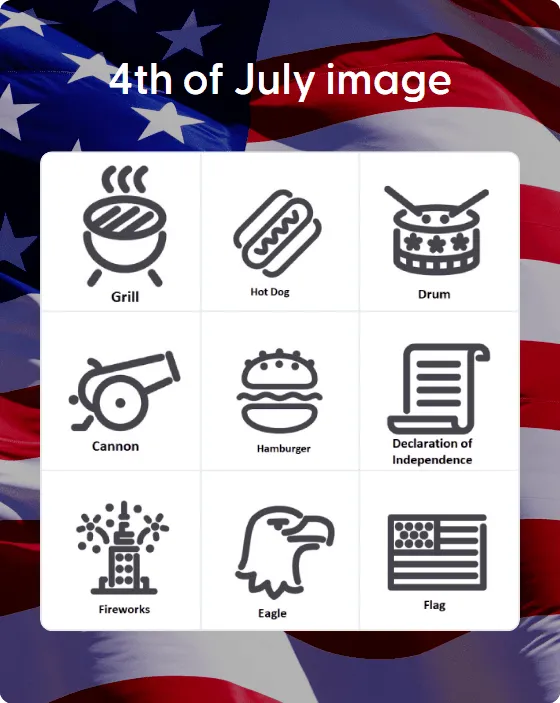
4th of July image bingo