Human and animal senses bingo
Discover how both humans and animals perceive the world around them through their senses! Perfect for educational purposes or animal lovers. Customize this bingo card and start playing today.
Choose an option
Why choose us
Fully editable
Grid size, free space, branding, human bingo, footer text & more
Print at home
Receive a randomized PDF with unique cards to print at home
Home delivery
We provide premium card printing and delivery.
Play online
Share a link, play virtually with up to 2,000 friends
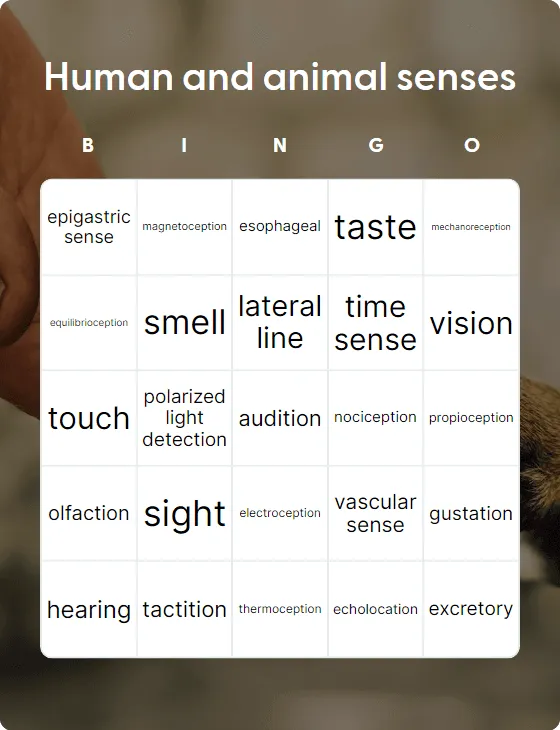
Items in this card
25- vision
- vascular sense
- touch
- time sense
- thermoception
- taste
- tactition
- smell
- sight
- propioception
- polarized light detection
- olfaction
- nociception
- mechanoreception
- magnetoception
- lateral line
- hearing
- gustation
- excretory
- esophageal
- equilibrioception
- epigastric sense
- electroception
- echolocation
- audition
How to use this card
Ready to get your bingo on? 🌟 Here’s how:
- Start the fun: Hit the ‘Print/Play’ button to begin.
- Make it yours: Jazz up your card with custom content and snazzy designs.
- Join the bingo fam: Quick sign-up (if you’re new here) or log in to jump back into the action.
- Spread the joy: Grab a unique link to share your card for online games with pals, or print it out for some real-life bingo fun!
Related categories
Related cards
Bird bingo
Genetics bingo
Parts of a cell bingo
Human circulatory system bingo
Biology terms bingo